The 5 Myths of Human Factors / Ergonomics From The Outside Looking In
Although there are only 5 myths in the blog below there may be many more, please don’t hesitate to contact and share your perceptions of this perpetually misunderstood discipline.
Myth 1 of 5: Human Factors and Ergonomics are two separate disciplines
The terms Human Factors and Ergonomics are usually considered synonymous.
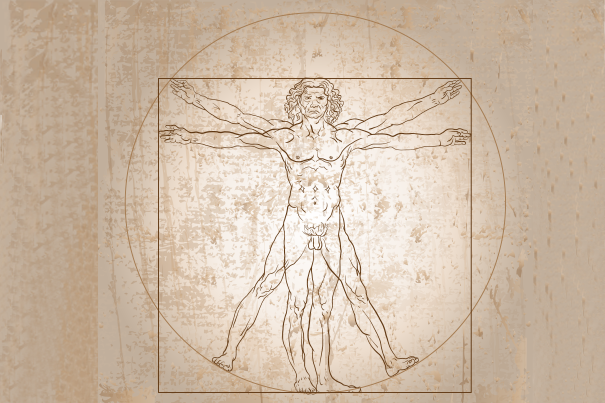
Some of the first unofficial ergonomists were Leonardo da Vinci (15th Century) and Alfonzo Giovanni Borelli (17th Century), who fused knowledge of nature, mechanics, anatomy, physics, architecture to pioneer innovative equipment design such as a bicycle, helicopter and aeroplane. The discipline of fusing knowledge applied to human centred design continued to be at the forefront of innovation but was not officially named until 1849 by the Polish scientist, naturalist and inventor W.Jastrzebowski. He wrote a book entitled “An Outline of Ergonomics, or the science of work based upon truths drawn from the science of nature”, published in 1857. Wojciech specifically selected the term ergonomics (study of work) because it is a neutral term, it implied no priority among contributing disciplines, it was easily remembered, and could be used in any language.
Fast forward a century, the date is 1949, Cambridge, England. A group of scientists, and inventors created the Ergonomics Research Society to formally create a group dedicated to the application of ergonomics thinking to systems, services and product design. On the other side of the pond, a team of scientists in southern California formed the San Diego Human Engineering Society. They published 2 journals, “Human Factors” and “Human Factors Ergonomics Society Bulletin” to describe the application of knowledge in design.
This difference in labeling of the same discipline either side of the pond might be where the confusion was born.
The application of a science, art, design, engineering fusion is essential for successful human centred design – no matter what you call it.
Myth 2 of 5: Human Factors / Ergonomics is expensive
If you type Ergonomics into any search engine (shopping channel), you will be hit with a montage of expensive office chairs. If you type human factors into any search engine (shopping channel), you will be hit with a colourful display of expensive textbooks. So, what can we conclude from this, Ergonomics can be defined as an expensive office chair, and human factors as a plethora of expensive textbooks.
As previously mentioned in Myth 1, it is the fusion of a wide range of disciplines to produce human centred designs, that aid health, wellbeing and human performance. Most people understand the premise of sport science, sports psychology to improve the performance of an athlete. The application of technology, science, technique and most important of all practice! The investment in sports science varies depending on the sport and the rewards for a successful performance.
It is no different when considering work science, the knowledge, and access to accredited ergonomists / human factors engineers is widely available if you look in the right places. Start with the Institutions that specialise in Ergonomics / human factors. An accredited practitioner will have a broad knowledge of products, systems and services that can be offered for a range of budgets.

Myth 3 of 5: Human Factors/ Ergonomics is inconsequential
How do you view your success, did you achieve all that you set out to do on your own? A consequence of your own brilliance? Do you believe in survival of the fittest? Dog eat dog world? Are you a fan of the blame culture? Good people and bad people? It will never happen to me. I am invincible! I have never made a mistake!
IF this is your philosophy on life then HF/E is very much inconsequential. It doesn’t matter what scenario or circumstances arise, you will be able to adapt, and cover your tracks.
However, if you are conscious that the advice provided by others, and the opportunity to practice with feedback enabled you to evolve within your chosen career. Then you will appreciate that the design of the workspace and systems of work does indeed have a consequence.
HF/E practitioners are accredited and experienced at designing products, systems and services which support your journey through life, from cradle to grave.
Are you being set up to fail? Or set up to succeed? Do you even care? Is it above your pay grade?

Myth 4 of 5: Human Factors / Ergonomics experts are intractable
The very nature of Human Factors / Ergonomics training is to be mindful of the different approaches that can be used to design, and not to dismiss the findings of all contributing disciplines. We apply a system thinking approach to explore a design from the perspective of all stakeholders. We are not part of a gang; we generally stand alone to ensure that the requirements of the stakeholders are met by the design.
This approach can make us very unpopular amongst the different project discipline tribes, who would like us to back their approach over others.
As systems thinkers, we see the full picture and are conscious of the long term plan, the sustainability and usability of a design long after the project team has packed up and gone home.
The subject is evidence based, and it is dependent on how clearly the HF / E practitioner sets the narrative and explains the importance of design elements in the context of use.
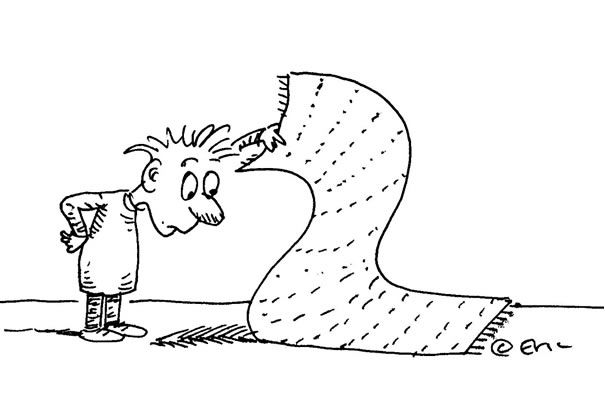
So, if you are after a compliant tractable HF/E practitioner then your return on investment is significantly reduced. They will essentially comply and provide little or no challenge that would help to influence the success of the design. Essentially, they would be helping you to sweep the dirt under the rug, or conscientiously objecting by neither confirming nor rejecting your design (fence sitting) but would produce a large volume about how to do Human Factors properly (i.e. how they do it).
IF however you want to produce a human centred design then be prepared to be challenged. We are the equivalent of an investigative journalist, we need to understand how your organisation really works, how your design is really used, and whether or not your design supports good health, wellbeing and human performance. We can sniff out the magic bullets, the fads, the initiatives that are harmful to your workforce, add to the confusion and complexity of running a business. We can help you reach new customers by making your product / services design more inclusive.
If your organisation is devoid of innovation, plateauing performance, we will challenge your thinking, help you to re-think and put in place a framework to change things up and reach more people.
Myth 5 of 5: Human Factors / Ergonomics is just Common Sense
I think that there is some truth in this, the idea that you would design something tailored for human use is easy to comprehend (i.e. common sense). It would be sensible to consider how your stakeholders interact and behave when using your design. To test that the design performs as per the expectations of all stakeholders.
Because let’s face it, when things go wrong, we look for someone to blame, someone to scapegoat and pin it on. The legal system is adversarial, one side versus another, someone has to be to blame. Court cases can often be long and highly complex affairs, compensation, life changing incidents can leave their mark on all concerned, employers, communities and the environment.
So, how do you reduce the likelihood of this spiral of doom from occurring in the first place?
You could identify all stakeholders, understand their objectives, the tasks, the goals and design something that matches the requirements of the stakeholders. Then you could test that your design meets their requirements and reconfirm during the lifetime of the design application. Easy to comprehend, makes sense, common sense!
But beware, it is not as easy to put into practice as it is to comprehend. Stakeholders don’t always agree, they change their mind, they can make irrational decisions to save money, and accelerate a project. A fully qualified and accredited Human Factors / Ergonomist can ride the wave of uncertainty, triangulate, mediate differing opinions, act as a conduit to ensure that the design stays on track, and doesn’t substitute out the human connection during the trade-off of conflicting requirements.
This capability isn’t learnt overnight, as a result of reading a book or completing an online course. It requires a solid theoretical base and years and years of practice…practice….practice.